
How we made Southfields
A behind-the-scenes look at the design process
When people see the finished photographs of our latest project in Southfields, it’s easy to assume the project arrived fully formed. Calm spaces. Carefully balanced materials. A confident presence on the street. In reality, the finished home is the result of a long, considered process shaped by listening, testing ideas, responding to constraints, and knowing when to simplify.
This is how we made Southfields.
Starting with a problem, not a statement
When Darren first visited the house, it was clear what wasn’t working.
“The ground floor was dark, disconnected and awkward,” he explains. “The kitchen and dining spaces didn’t relate to each other at all. It felt grim, honestly.”
The brief itself wasn’t complicated. The clients wanted more space, better light, and a home that worked for family life. What was complex was the site: a corner plot with a strong street presence, a high boundary wall, close neighbours, and a very limited footprint.
Rather than beginning with a bold architectural gesture, the early conversations focused on how the house needed to feel to live in day to day.
When the first idea doesn’t work
Like many projects, this one didn’t go in a straight line.
An early design explored a much more complex scheme. It was ambitious, visually striking, and difficult to build. Once costed properly and tested with the contractor, it became clear it wasn’t the right answer.
“Through the process of trying to simplify it, we realised we were forcing something that wasn’t coming together,” Darren says. “So we stopped, took a step back, and changed direction.”
That moment is central to how we work. Rather than pushing an idea through at all costs, we recognise when a design isn’t serving the client, the budget, or the site, and have the confidence to rethink it.
What replaced it was quieter, more restrained, and ultimately far stronger.
Designing from the boundaries inwards
One of the defining challenges at Southfields was the relationship with the street and neighbouring properties.
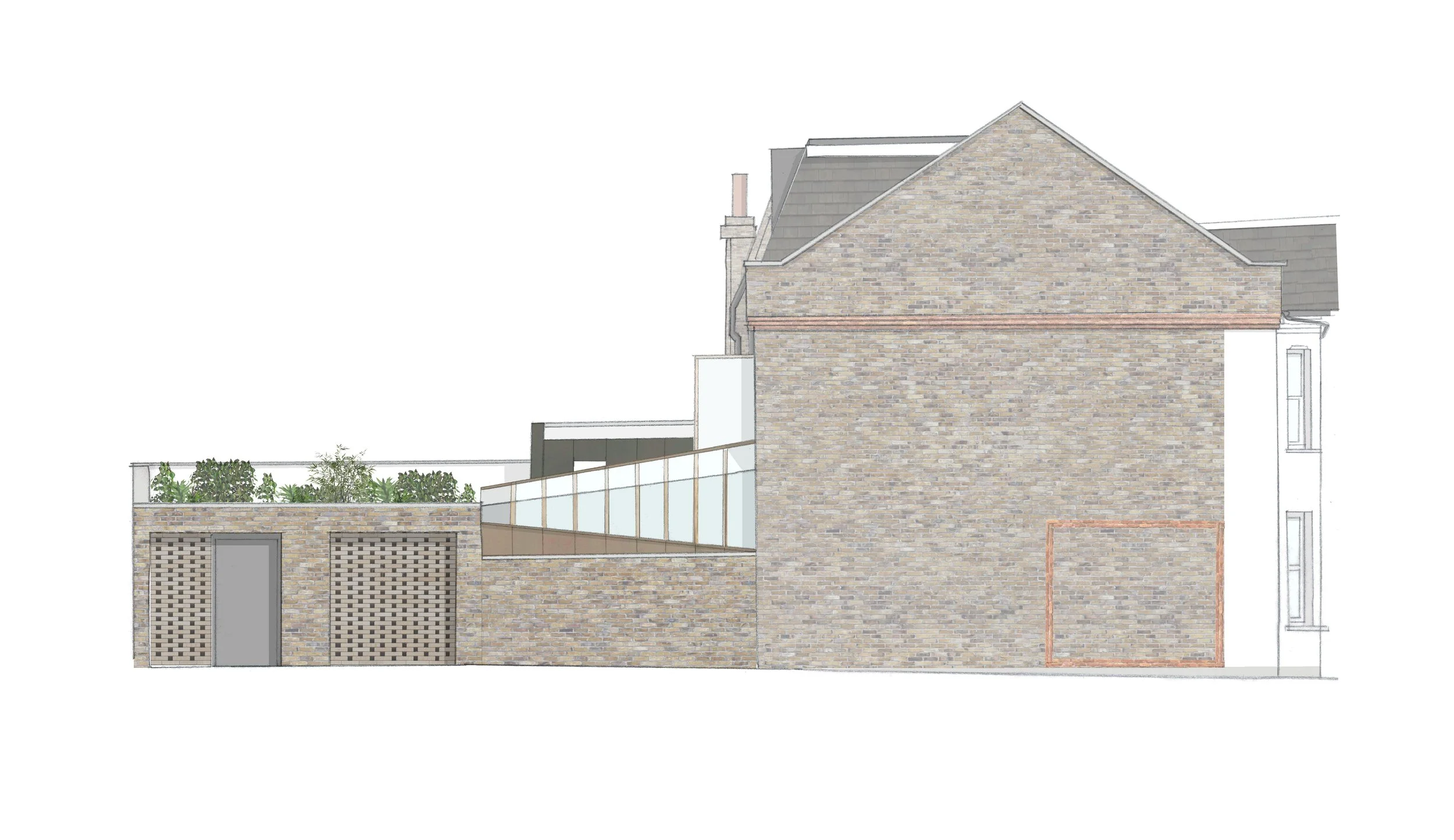
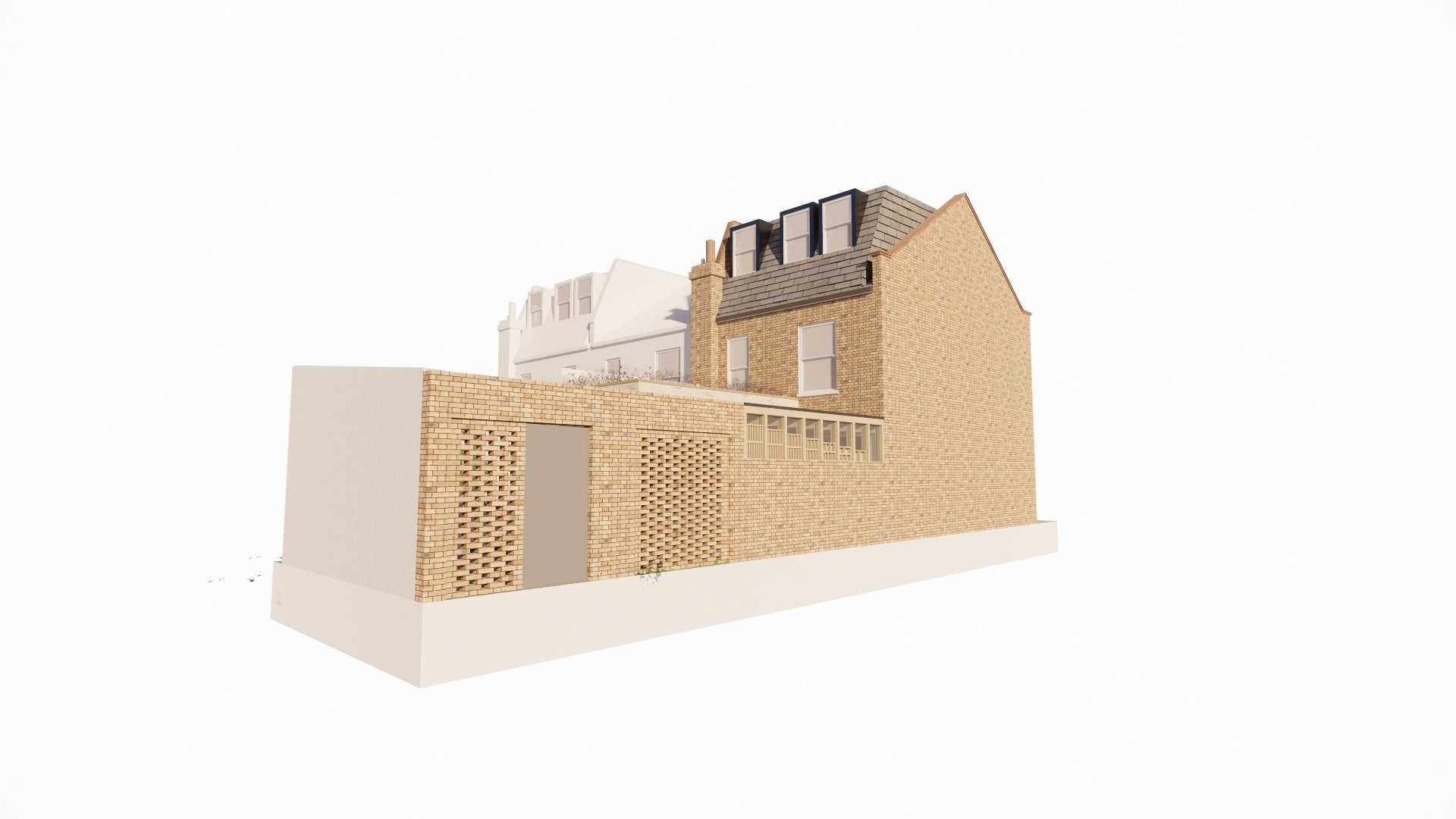
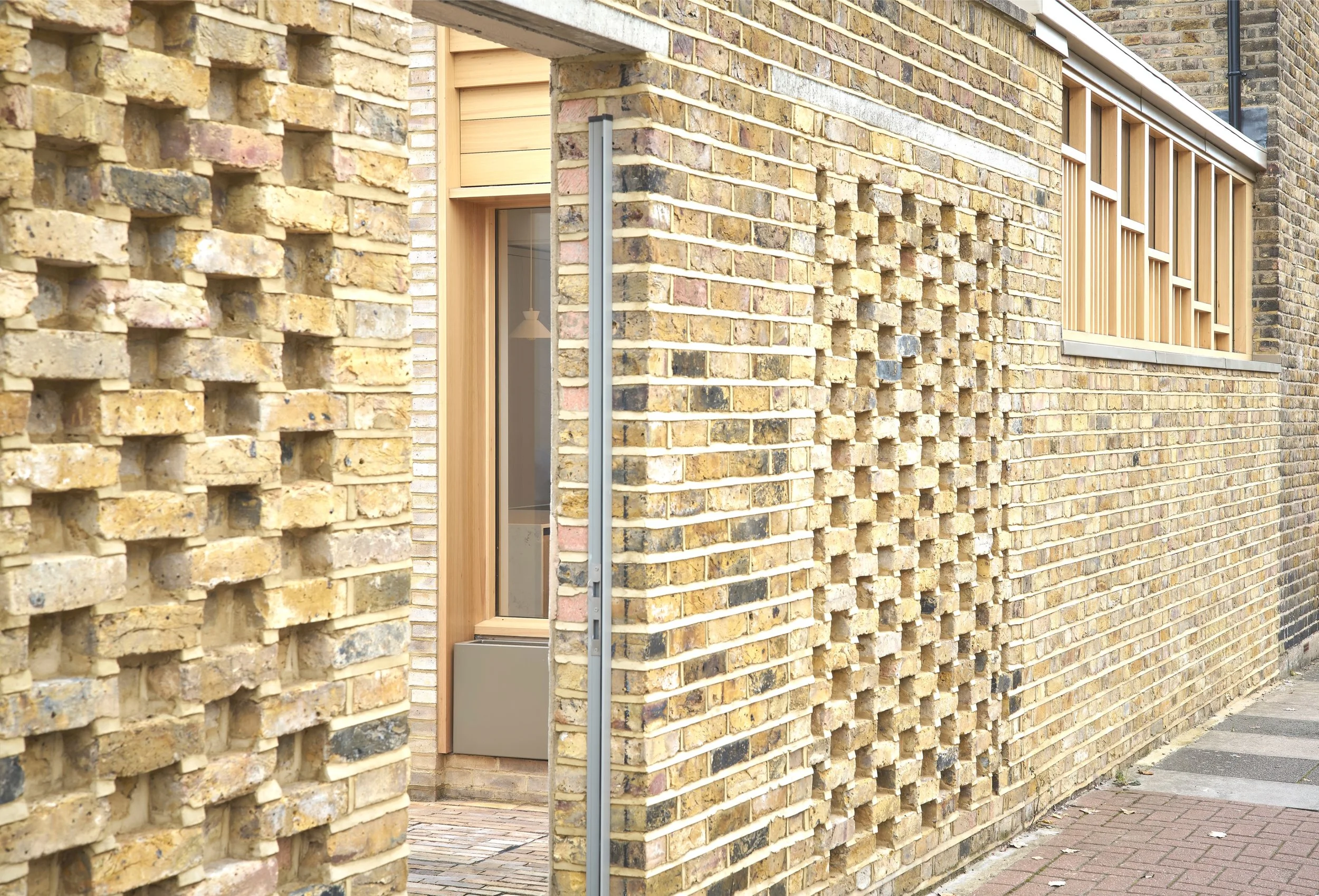
The existing boundary wall was tall and visually dominant. Rather than ignoring it, the new extension was designed to respond directly to its height. Glazing levels step down towards the garden and the side street, preventing the building from feeling overbearing from inside or out.
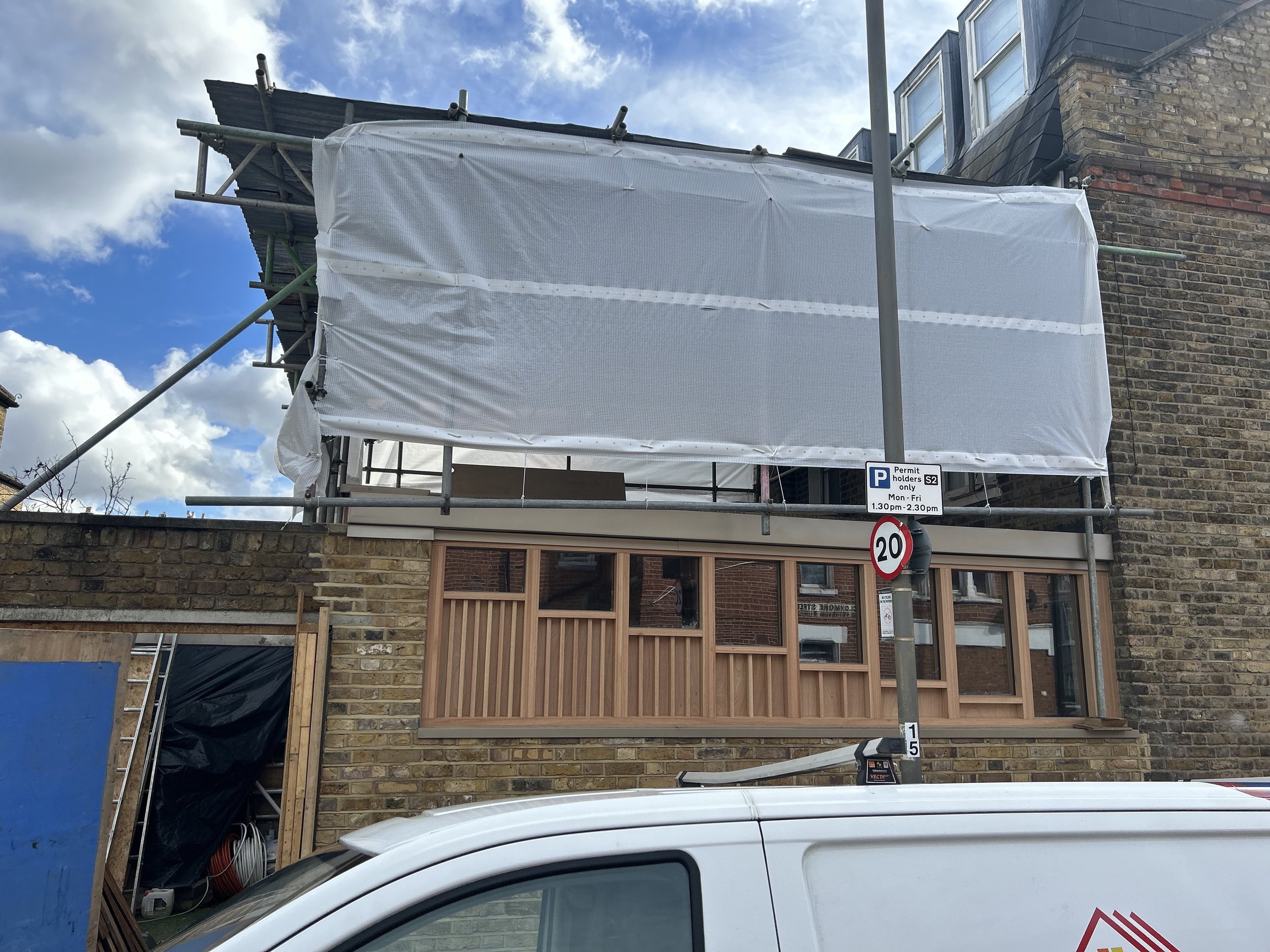
“That stepped timber façade came from solving a very practical problem,” Darren explains. “How do you bring in daylight without feeling like you’re living in a goldfish bowl?”
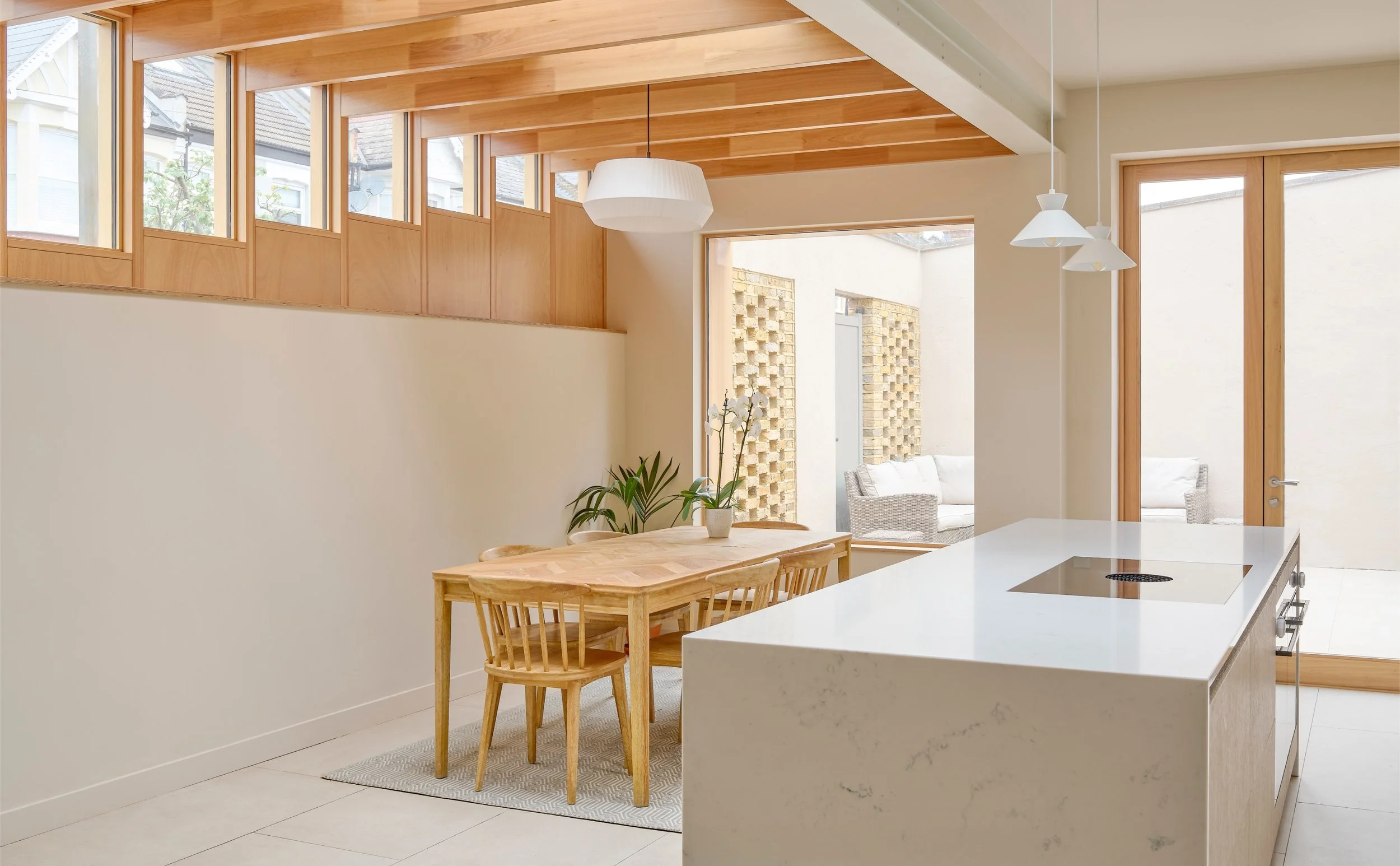
The answer was a rhythmic pattern of timber and glazing that filters views, balances privacy and openness, and contributes positively to the street. What looks like a design feature is, in reality, the result of careful problem-solving.
Making space feel bigger than it is
The completed extension adds just over 13 square metres. There was no opportunity to build more without compromising the garden. So the focus shifted to using the space better.
Walls were removed to reconnect the kitchen and dining areas. The layout was designed around how the family moves through the space, not around fixed ideas of rooms.
That simplicity is intentional. Good design often looks obvious in hindsight.
Where the hidden craft really lives
Some of the most important work at Southfields does not show up in the photographs.
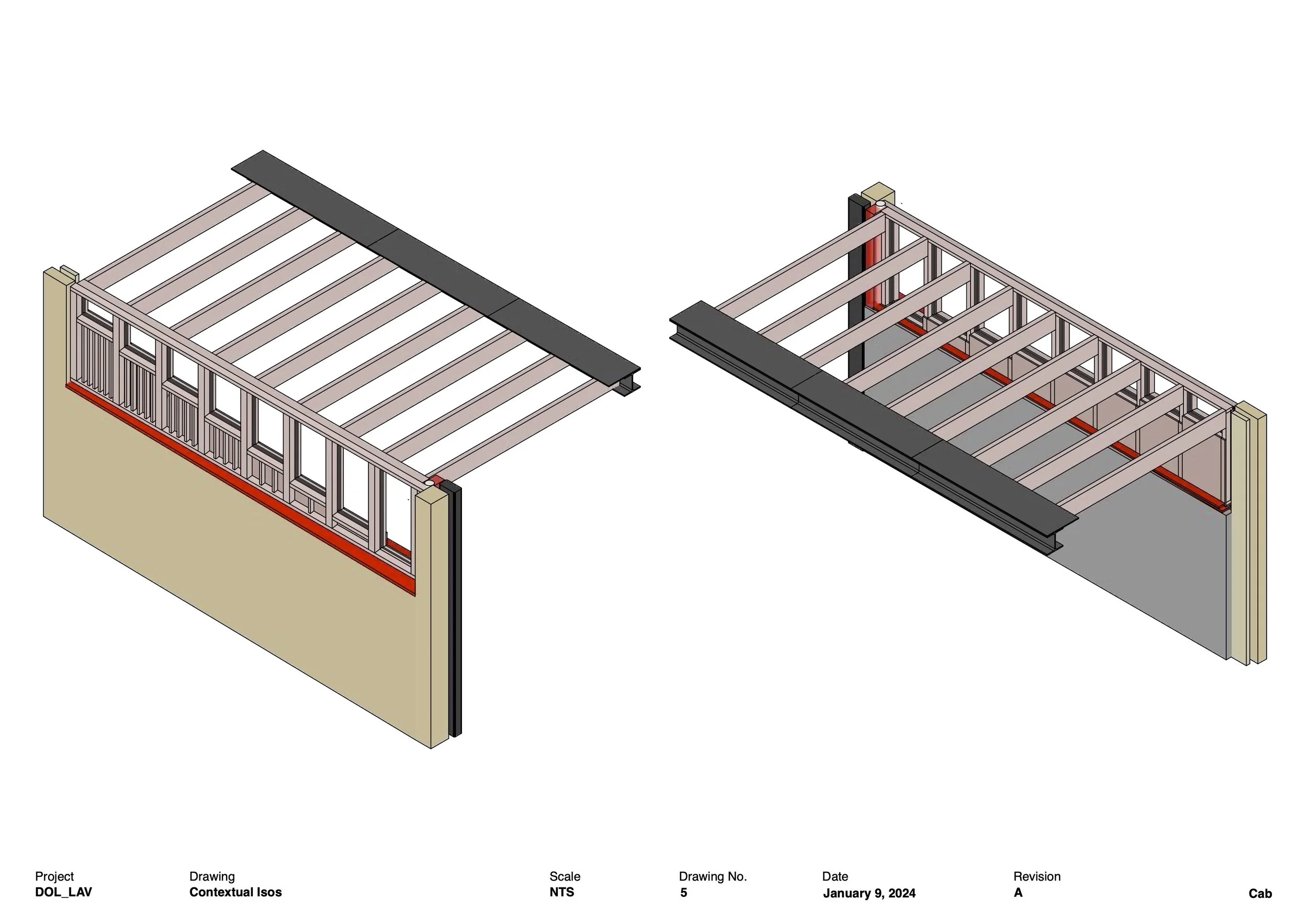
The junction where the new extension meets the existing wall was drawn and redrawn, tested in multiple section cuts, and coordinated closely with the joiner and contractor. Timber species, finishes, and details were refined to balance longevity, maintenance, and appearance.
“There was a huge amount of drawing and coordination to make that corner work properly,” Darren says. “That’s where craft really lives, in the details no one notices until they’re wrong.”
This level of care is deliberate. It’s how we ensure buildings age well and continue to feel good to live in long after completion.
Sustainability as part of the everyday
Sustainability wasn’t treated as a separate layer.
The extension exceeds Part L requirements. Green roofs support biodiversity. The layout maximises natural light to reduce reliance on artificial lighting. Materials were chosen for performance, durability, and how they feel to inhabit.
None of this is about making a statement.
“Our aim is always to make sustainability feel simple and natural,” Darren explains. “If it improves comfort and daily life, it’s usually the right choice anyway.”